Most people consider definitions a mere semantic exercise, relegated to dictionaries or jurisprudence. In truth, definitions are the source code of human thought, the exact root of the entire spiritual framework on which every reasoning, strategy and decision is founded.
Imagine the architecture of the mind as an inverted cone: a dense web of concepts, theses, principles and values that expands upward. This is the cognitive-conceptual structure of the mind.
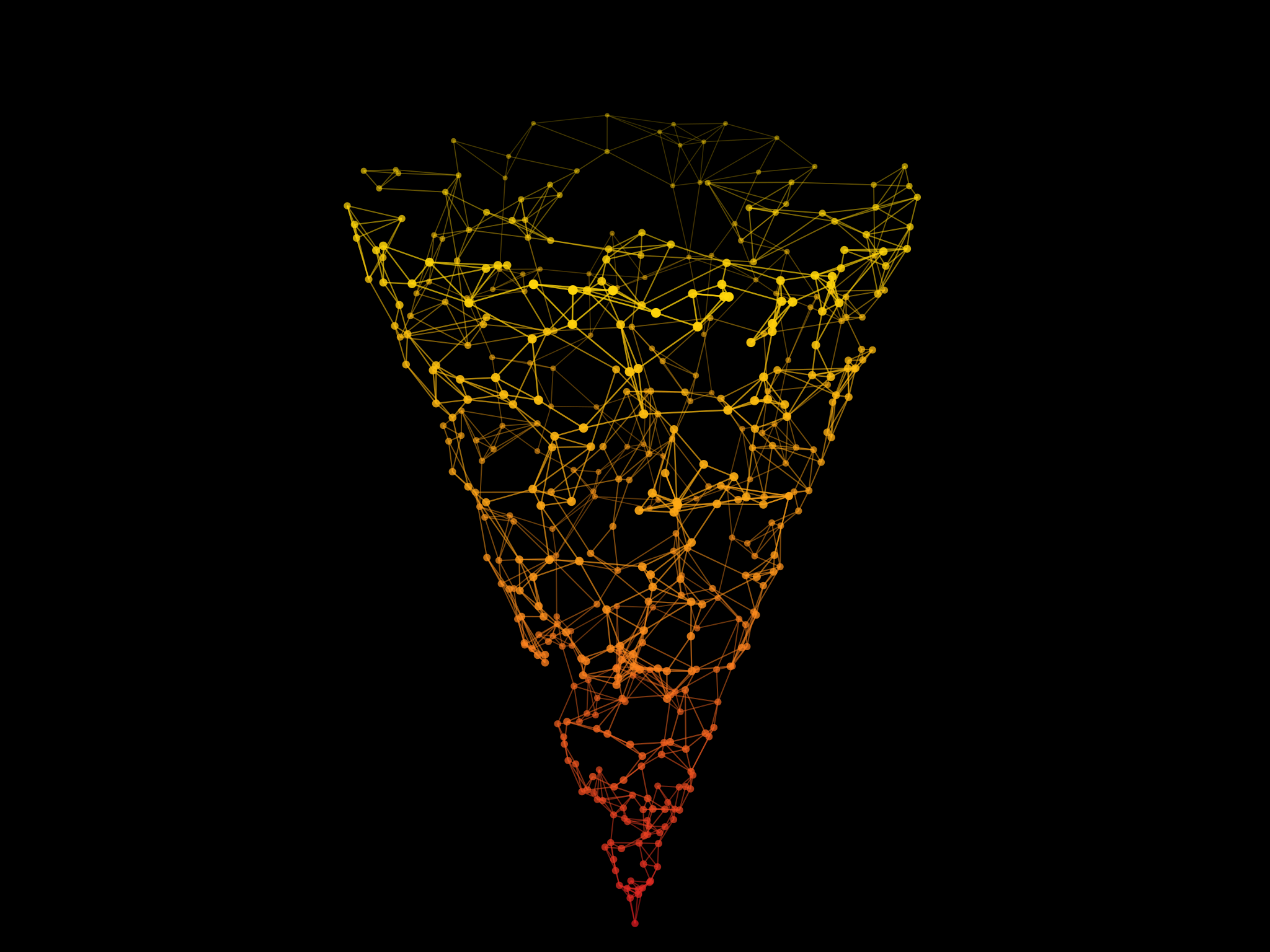
At the lower vertex lie the definitions. Think of the mindset as a plant. If the root is weak, the plant will be weak too. Likewise, if the definitions are weak (ambiguous or wrong), the entire geometry above will be weak, and that weakness translates into failure. Whoever gets the basic definition wrong, in every concept, inevitably ends up failing at the most important task, that of value creation, greatly reducing the chances of success. This is because value creation starts from our mind.
Hence the saying that success is a matter of mindset.
The dividing line between those who execute and those who design, between failure and prosperity, is played primarily on the difference between two categories of definitions: low-threshold and high-threshold ones.
The trap of low-threshold definitions - Low-threshold definitions are those that do not stimulate growth and anesthetize the mind, providing a justification for mere passive existence. They are accommodating and put you in the position of often being able to consider yourself something you are not.
The engine of high-threshold definitions - Success requires high-threshold definitions, that is, definitions that impose a constraint of purpose.
For example, the popular definition of man is "entity belonging to the species homo sapiens", which implies "mammal with the gift of speech, who mates for pleasure as well as to reproduce". This is a simplistic and inclusive definition, which leads to considering all 8 billion individuals who populate the Earth as belonging to humanity, which is a colossal mistake, because for the System, man is the one who is driven by the interest to prosper.
Thus a definition like "social entity driven by the interest to prosper" becomes less inclusive, stimulates interest in the meaning of prosperity (which very few know) and, therefore, in wanting to prosper. From here stem the interest in understanding how one succeeds and in understanding many other things that lead to success in life.
To put it in terms of King and queen, high-threshold definitions lead man to pursue growth and prosperity, low-threshold ones lead him to pursue sufficiency, and the King does not like sufficiency at all!
Action derives from language Shallow pragmatism often leads to focusing obsessively on the "how" things are done, ignoring the "what". But it is not possible to perform a high-level action if the original concept has not been brought into focus with surgical precision. Action is the logical consequence of thought, and thought is limited or enhanced by the boundaries of the definition that generates it.
Success, understood as achieving and maintaining the condition of prospering in freedom, is primarily a matter of mindset. To develop a success mindset and stop being a minor cog, the first step is not operational but philosophical: it consists in the relentless rewriting of one's internal dictionary.